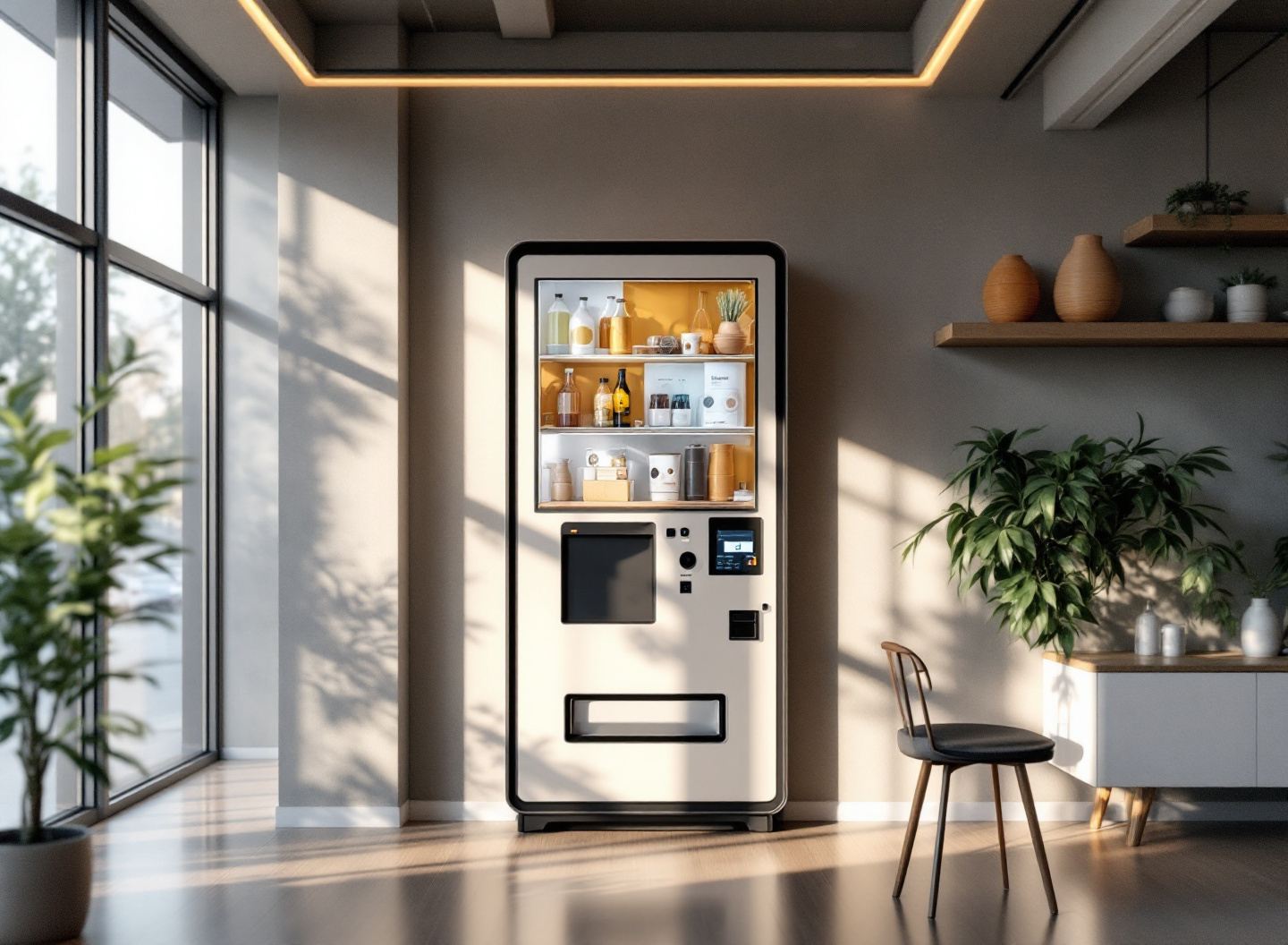
The cost of a vending machine in 2026 ranges from $1,200 to $10,000 depending on type and features, but the true startup investment extends far beyond the machine itself. When you factor in location placement fees, initial inventory, permits, insurance and monthly operating expenses, most first-time operators should budget between $3,000 and $15,000 to launch a sustainable vending business in 2026.
What Is the Average Vending Machine Cost in 2026?
A standard snack or beverage vending machine typically costs between $1,200 and $3,500 new in 2026. Basic mechanical snack dispensers start around $1,200 to $1,800, while refrigerated drink machines range from $2,000 to $3,500. Specialty units, including combo machines that dispense both snacks and beverages or niche offerings like coffee brewers and frozen treat dispensers, can climb to $5,000 to $8,000. Advanced models with touchscreen interfaces, cashless payment systems and real-time inventory tracking push toward $6,000 to $10,000.
Used machines offer a budget-friendly entry point. Refurbished units typically cost 40 to 60 percent less than new equipment, ranging from $600 to $2,500 depending on condition and features. Leasing is another path: some operators pay $100 to $300 monthly rather than purchasing outright, though leasing rarely builds equity and total cost-of-ownership often exceeds purchase within 24 to 36 months.
Key Takeaway: A new standard vending machine averages $2,000 to $3,500 in 2026, but specialty and smart-enabled units can exceed $8,000. Budget for the machine purchase as only 20 to 30 percent of your total startup investment.
How Much Do I Need to Sustain a Vending Machine?
Sustaining a vending machine means covering recurring monthly costs beyond the initial purchase. These expenses include product restocking, vehicle fuel or delivery fees, machine maintenance, credit card processing fees (typically 2 to 4 percent of cashless transactions) and location rent or commission (usually 10 to 30 percent of gross revenue). A moderately performing snack machine in a mid-traffic location generates $200 to $400 monthly in revenue, requiring $80 to $150 in monthly operating costs, leaving net profit of $50 to $250.
Location economics matter significantly. A truck stop snack machine may sustain itself on $120 to $180 monthly in restocking and logistics, while a specialty beverage unit in a gym or office building requires $150 to $250 monthly when accounting for premium products, frequent refills and location fees. First-time operators should reserve a cash reserve of $1,000 to $2,000 to absorb three to six months of operating costs while the machine builds customer traffic and revenue stability.
Key Takeaway: Plan for $100 to $300 in monthly operating expenses per machine. Most machines reach sustainable profitability within 6 to 12 months, but require upfront cash reserves to weather the ramp-up period.
What Affects Vending Machine Pricing?
Vending machine pricing depends on several factors: machine type (snack, beverage, combo, specialty), new versus used condition, payment systems (coin-only versus cashless integration), capacity and size and brand reputation. A coin-operated snack machine costs $1,200 to $2,000, while an identical model with integrated credit card and mobile payment processing adds $500 to $1,500 to the price tag. Smart machines with cellular connectivity, real-time inventory alerts and AI-powered demand forecasting cost $4,000 to $10,000.
Geographic location and supply chain pressures also influence pricing. Machines ordered in high-demand seasons (late spring and early summer) may carry a 5 to 15 percent premium over off-season purchases. Energy efficiency certifications, warranty length and manufacturer support tiers further differentiate costs. A 24-month warranty with on-site service support adds $300 to $600 versus a basic 12-month parts-only warranty.
Key Takeaway: Cashless payment capability and smart technology features add 30 to 50 percent to base machine cost. Buy timing, warranty and brand reliability influence final pricing as much as hardware specifications.
New vs Used Vending Machines: Which Is Better?
New machines offer full warranties (typically 12 to 24 months), latest payment technology, factory reliability and manufacturer support. The trade-off is higher upfront cost: $2,000 to $10,000. Used or refurbished machines cost 40 to 60 percent less, $600 to $2,500, but carry shorter or no warranty, potential hidden mechanical issues and outdated payment systems that lose customer convenience and transaction volume. A used mechanical snack machine might fail after 8 to 16 months, requiring expensive repairs that erode early-stage profitability.
For first-time operators with limited capital, refurbished machines from reputable dealers (with tested mechanics and 6 to 12-month limited warranties) offer a middle ground. For established operators scaling a fleet, new machines justify the premium through reduced downtime, higher transaction value from modern payment options and predictable maintenance schedules. The table below compares both paths:
| Comparison | New machines | Used machines |
|---|---|---|
| Upfront cost | $2,000 to $10,000 | $600 to $2,500 (40 to 60 percent less) |
| Warranty | 12 to 24 months | Shorter or no warranty |
| Payment technology | Latest payment technology | Outdated payment systems |
| Reliability and support | Factory reliability and manufacturer support | Possible hidden mechanical issues |
Key Takeaway: New machines suit operators with capital and scale ambitions; used machines fit bootstrapped startups willing to accept higher maintenance risk. Buy used only from certified vendors offering inspection reports and limited warranties.
How Much Does It Cost to Have a Vending Machine Put Somewhere?
Placing a vending machine at a location involves location fees, commissions or revenue-sharing arrangements. Most high-traffic venues (retail stores, gyms, office buildings, truck stops) charge 10 to 30 percent of gross revenue as commission or rent. A machine generating $300 monthly in a location charging 20 percent commission costs $60 per month for that placement. Some venues charge flat monthly rent of $50 to $200 instead, which works best for high-volume locations.
Securing placement also requires negotiation time, venue contracts and sometimes upfront deposits of $100 to $500. New machine operators should expect 4 to 8 weeks of outreach to lock in two to three initial placements. Administrative costs, contract preparation, permits where required and location insurance riders, add another $200 to $500 one-time. High-visibility locations like airports or train stations may demand $1,000 to $5,000 upfront fees but generate $800 to $2,000 monthly revenue.
Key Takeaway: Placement costs average 10 to 30 percent of machine revenue monthly, plus 4 to 8 weeks of negotiation per location. Budget $300 to $1,500 for administrative and deposit costs when securing your first three placements.
Can You Build a Vending Machine Business on a Budget?
Yes, but budget operations require disciplined prioritization. Start with one used refurbished snack machine ($800 to $1,500) placed at a moderate-traffic location already committed to hosting. Invest $500 to $800 in initial inventory, focusing on proven fast-movers like chips, candy and bottled water. Spend $200 to $400 on basic business setup: license, liability insurance and accounting software. This minimal path costs $1,500 to $3,200 total.
However, budget constraints carry tradeoffs. A single used machine with weak payment technology may capture only 60 to 70 percent of potential transaction value compared to a cashless-enabled unit. Slower restocking cycles due to limited capital reduce revenue per location. Most budget operators reinvest early profits into a second machine within 6 to 12 months, gradually building to a sustainable multi-unit fleet. Those starting with $5,000 to $8,000 can launch with two new machines, better payment systems and multiple locations simultaneously, accelerating path to consistent profitability.
Key Takeaway: Budget startups can launch on $1,500 to $3,200 with one used machine, but accept slower scaling and lower per-unit revenue. Investing $5,000 to $8,000 in two new machines with modern payment systems creates faster profitability and multi-location flexibility.
A Guide to Starting a Vending Machine Business: Beyond Purchase Price
A successful vending machine business requires investment and planning far beyond machine acquisition. The first step is business structure and licensing: register your business (LLC or sole proprietorship), obtain an employer identification number (EIN) from the IRS and secure local business licenses and sales tax permits. This foundational work costs $100 to $500 and takes 1 to 3 weeks. Next, invest in liability and property insurance, typically $300 to $600 annually, protecting your machines, inventory and personal assets.
Inventory procurement and restocking logistics form the operational backbone. Negotiate wholesale pricing from distributors or cash-and-carry outlets, typically 20 to 35 percent below retail for snacks and beverages. Establish a restocking schedule aligned with location traffic patterns: high-traffic placements may need weekly visits, while slower venues work on biweekly or monthly cycles. Logistics costs (fuel, vehicle wear, time) usually run $50 to $150 per machine monthly at efficient scale.
Location scouting and relationship-building take time but determine success. Visit high-foot-traffic venues, retail stores, gyms, office complexes, truck stops, schools and hospitals and pitch your value proposition: passive revenue stream for the location with zero effort or upfront cost. Prepare simple one-page agreements outlining commission, duration and restocking frequency. Build a portfolio of 3 to 5 initial placements before your first machine arrives to maximize early revenue. Track each location's performance weekly using simple spreadsheets or mobile apps and be prepared to relocate underperformers within 60 to 90 days.
Finally, consider growth tools and technology. Platforms like KioskX provide resources and community for vending operators navigating business operations and scaling strategies. Modern operators use inventory management software to track stock levels, forecast demand and optimize product mix per location. These tools (often free tier or $20 to $50 monthly) significantly reduce guesswork and shrinkage over time.
Key Takeaway: Successful vending requires business registration and insurance ($400 to $1,100), wholesale relationships, disciplined restocking logistics and 3 to 5 pre-secured locations before your machine arrives. Build relationships and operations infrastructure in parallel with machine purchasing.
Frequently Asked Questions
Is that enough to buy and fill a vending machine?
A typical minimum budget to purchase and fully stock a single new snack machine is $3,000 to $4,500: machine cost ($2,000 to $3,500) plus initial inventory ($500 to $1,000). If buying used refurbished, this drops to $1,500 to $2,500. Ensure you reserve an additional $1,000 to $2,000 for operating capital and unexpected repairs during your first 6 months.
How can I find a place to put it?
Identify high-foot-traffic venues aligned with your machine type: retail stores and pharmacies for snack machines, gyms and offices for beverage units, truck stops for combo machines. Visit in person, ask for the general manager or operations lead and present a simple proposal showing how a vending machine adds passive revenue with zero effort for the venue. Prepare contracts or letters of intent before purchasing machines. Many operators secure 2 to 4 locations within 4 to 8 weeks of consistent outreach.
What is the most profitable type of vending machine?
High-margin specialty machines (specialty beverages, premium coffee, fresh snacks) often outperform standard snack dispensers per dollar invested. However, standard snack and beverage combinations remain most reliable: high demand, forgiving product shelf-life and lower operational complexity. Profitability depends more on location traffic, price point and commission rate than machine type. A snack machine in a busy retail location often outearns a premium coffee unit in a slow office building.
How long does it take to break even on a vending machine?
Most new machines break even within 6 to 12 months when placed in decent-traffic locations generating $200 to $400 monthly revenue. Machines in high-traffic venues (malls, transit hubs, hospitals) may break even in 3 to 6 months. Used machines cost less upfront, so break-even occurs faster, often within 2 to 4 months, if reliability doesn't suffer. Operators who secure multiple locations simultaneously can reach collective break-even faster by spreading fixed costs across a fleet.
What hidden costs should I expect in my first year?
Common unexpected expenses include machine repairs or replacement parts ($100 to $500), location relocation costs due to underperformance ($50 to $300), business license renewals and tax prep ($200 to $600), inventory shrinkage or damage (2 to 5 percent of stock cost monthly) and payment processing chargebacks or disputes ($0 to $200). Reserve 10 to 15 percent of projected gross revenue for contingency in year one.
Conclusion
The cost of launching a vending machine business in 2026 ranges widely based on machine type, purchasing strategy and location selection. A single new snack or beverage machine costs $2,000 to $3,500, but a realistic first-year budget, including startup overhead, inventory, placement fees, insurance and operating reserves, typically falls between $3,000 and $15,000 depending on scale and ambition. The most successful operators prioritize location relationships and operational discipline over flashy equipment, reinvesting early profits to expand their fleet gradually.
Whether you're bootstrapping a single machine or scaling a multi-unit operation, understanding the complete cost picture is essential. Budget conservatively for recurring expenses, build cash reserves for emergencies and focus on securing high-traffic placements before purchasing machines. Resources like the KioskX blog offer ongoing guidance on vending operations, business scaling and industry trends as you grow.
Ready to start your vending business? Begin by visiting high-traffic venues in your area, pitching your concept and securing 2 to 3 location commitments. Then move forward with equipment selection confident in your 2026 pricing and cost structure. Your first six months will teach you invaluable lessons about location performance, product preferences and operational efficiency, knowledge that compounds as you build your fleet and refine your business model.