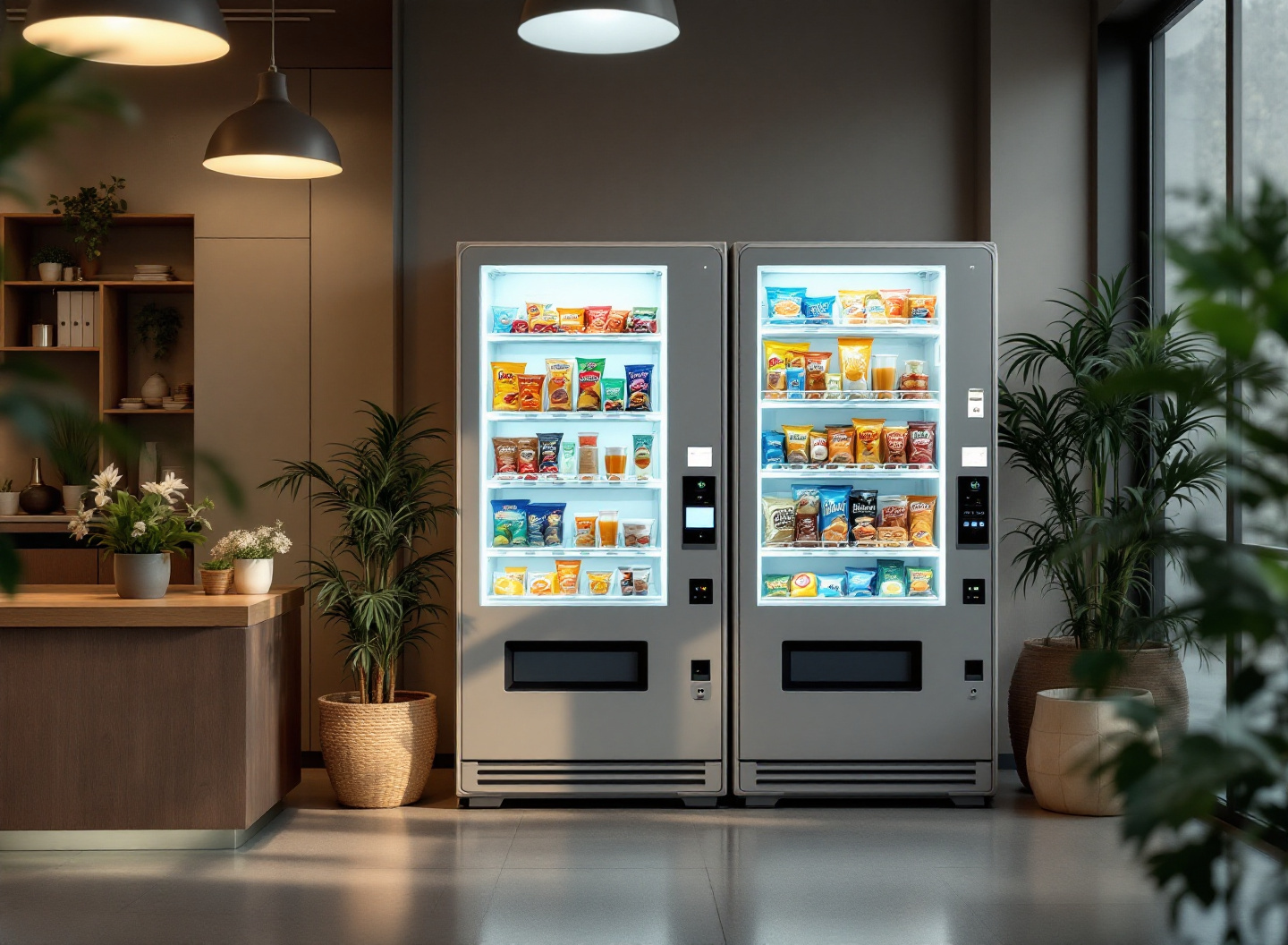
Starting a snack vending machine business remains one of the most accessible ways to generate passive income in 2026, with entry costs as low as $300 to $500 for used machines and minimal overhead compared to traditional retail. Whether you're looking to buy vending machines online, source used snack vending machines locally or invest in feature-rich new models with card readers, this guide walks you through every decision point from selection to placement to daily operations.
What Is a Snack Vending Machine?
A snack vending machine is a self-service automated cabinet that dispenses packaged snacks, candy, chips and other grab-and-go items in exchange for cash, coins or card payments. Modern snack vending machines range from simple mechanical units that accept coins only to sophisticated models equipped with touchscreens, LED displays, card readers and real-time inventory tracking.
The core appeal of candy and snack machines lies in their simplicity: stock the machine, place it in a high-traffic location and collect revenue with minimal daily involvement. Unlike full-service vending routes that require frequent restocking, many snack machine operators visit locations weekly or bi-weekly, making the business model scalable for part-time entrepreneurs or those running multiple routes simultaneously.
Key Takeaway: Snack vending machines are low-touch, automated retail solutions that work 24/7 in any location with foot traffic, requiring only periodic restocking and maintenance.
How Much Does a Snack Vending Machine Cost?
Snack vending machine pricing spans a wide range depending on age, features and condition. Used snack vending machines for sale typically cost between $300 and $1,500, with machines under $500 commonly available through online marketplaces, local dealers and auctions. New models with advanced features like card readers, drop sensors and digital displays run $2,000 to $4,500.
Your total startup investment should also account for initial product inventory (typically $100 to $300), location deposits or revenue-sharing agreements with site owners and any repairs or refurbishment needed for used units. Many entrepreneurs test the business model with a single affordable used machine before scaling to multiple locations or upgrading to new equipment.
Key Takeaway: Entry into snack vending can cost as little as $500 for a used machine plus inventory, making it accessible to part-time entrepreneurs and those with limited capital.
Used Snack Vending Machines vs. New Models: What Should You Buy?
Used snack vending machines offer immediate affordability and faster return on investment, especially for operators testing their first location or building a route on a tight budget. A well-maintained used unit typically lasts 5 to 10 more years and functions identically to new machines for basic cash-only operations.
New snack vending machines justify their higher cost through built-in card readers, drop sensors that prevent theft and jamming, flexible product configurations and digital tracking that simplifies inventory management. Newer models also carry manufacturer warranties and require fewer repairs during their early operational years. For operators planning to place machines in high-traffic corporate offices, gyms or schools, the reliability and payment flexibility of a new machine often outweigh the upfront cost.
Key Takeaway: Choose used machines to minimize risk and test locations; choose new machines when you need payment flexibility, reliability guarantees and advanced features like drop sensors.
What Products Can I Sell in a Snack Vending Machine?
Snack vending machines accommodate a wide variety of packaged products, from traditional candy bars and potato chips to healthier options like granola bars, nuts, dried fruit and protein snacks. The most successful operators stock a mix of impulse purchases (chocolate, gum) and everyday snacks (crackers, popcorn) to appeal to different customer preferences and maximize per-visit revenue.
Product selection should reflect your location's customer base. Office buildings and corporate campuses respond well to protein bars and trail mix; schools and gyms favor candy and sports drinks (where permitted); retail stores and convenience store partnerships often benefit from premium or specialty snacks. Modern snack machines with flexible configurations allow you to adjust shelf spacing and product mix without tools, adapting quickly to sales data and seasonal demand.
- Candy (chocolate bars, gum, mints, hard candy)
- Chips and savory snacks (potato chips, tortilla chips, pretzels)
- Cookies and baked goods (granola bars, pop-tarts, brownies)
- Nuts and dried fruit (almonds, cashews, raisins, trail mix)
- Healthier options (protein bars, veggie chips, popcorn)
Key Takeaway: Stock a balanced mix of impulse and everyday snacks tailored to your location's customer demographics; flexible-configuration machines let you pivot product mix based on real sales data.
Can Snack Vending Machines Accept Credit Cards?
Yes; snack vending machines with card readers are now standard on new models and increasingly common on upgraded used machines. Card payment capability significantly increases transaction volume and average transaction value, as customers no longer need to carry cash or exact change. According to industry surveys, machines with card readers generate 20 to 30 percent higher revenue than cash-only units in the same location.
Card readers on modern snack machines integrate with common payment processors and can accept contactless payments, mobile wallets and traditional card swipes. Some operators retrofit card readers onto older machines, though this requires technical skill and may not offer the seamless integration of factory-installed systems. If you're buying vending machines online or locally, prioritize models with built-in card readers for maximum revenue potential and customer satisfaction.
Key Takeaway: Card-enabled snack vending machines generate significantly higher revenue than cash-only units; prioritize card reader capability when selecting new equipment or planning upgrades.
Where Can You Place a Snack Vending Machine?
High-traffic locations with captive audiences are ideal for snack vending. Corporate offices, where employees lack time to leave for lunch, consistently rank among the best placements; gyms and fitness centers attract customers seeking post-workout snacks; schools and universities offer steady foot traffic during lunch and break periods (subject to local policies); retail stores, laundromats and waiting areas (medical offices, car washes) provide additional opportunities.
Successful placement requires a revenue-sharing agreement or location lease with the site owner. Most operators offer the location owner 15 to 25 percent of gross revenue in exchange for floor space and electrical access. Before committing to a location, assess foot traffic patterns, competitor machines nearby and the site owner's willingness to promote the machine to staff or customers. Test placements with a single machine before expanding your route.
- Corporate offices and break rooms
- Gyms, fitness centers and sports facilities
- Schools, universities and educational facilities
- Retail stores and shopping centers
- Laundromats and self-service laundries
- Medical and dental offices
- Car washes and service stations
- Hotels and hospitality venues
Key Takeaway: Target high-traffic locations with captive audiences; negotiate revenue-sharing agreements that incentivize site owners to promote your machine and protect your placement long-term.
How to Choose the Right Snack Machine for Your Business
Start by defining your budget, timeline and scale. If you're testing the business model with one machine, a used unit under $500 minimizes risk; if you're planning a multi-machine route or targeting premium locations like corporate offices, invest in a new machine with card readers and drop sensors. Evaluate machine size and footprint against your intended locations; compact units fit tight spaces, while full-size cabinets maximize product capacity and revenue per location.
Check for drop sensors, which prevent product jams and theft by detecting when an item successfully reaches the collection bin. Flexible product configurations allow you to adjust shelf height and spacing without disassembling the machine, critical for testing different product mixes. Review warranty coverage, local dealer support and parts availability before purchasing. Finally, prioritize machines with transparent front panels so customers see product clearly, reducing failed purchases and customer complaints.
Key Takeaway: Match machine features to your budget and placement strategy; prioritize drop sensors, card readers, flexible configurations and warranty support over flashy aesthetics or unnecessary complexity.
Candy and Snack Machines With Drop Sensors and Flexible Configurations
Drop sensors are electromechanical or optical devices that confirm a product has fallen into the collection bin before the machine accepts payment or dispenses the next selection. This technology eliminates "no drop" jams where customers pay but receive nothing, a leading cause of customer complaints and chargebacks. Machines with drop sensors also reduce theft by preventing users from exploiting mechanical vulnerabilities to free-drop products.
Flexible product configurations allow operators to adjust shelf spacing and dividers without tools, enabling rapid product mix changes based on sales performance and seasonal demand. This adaptability is especially valuable when testing new locations or responding to customer feedback. When evaluating snack vending machines for sale, confirm that drop sensors function on all columns and that shelf adjustments are intuitive and tool-free.
Key Takeaway: Drop sensors and flexible configurations are essential features for professional operators; they reduce customer frustration, prevent theft and enable rapid product optimization.
Popular Snack Machine Brands and Their Features
Leading snack machine manufacturers include MDB, Seaga, Fastcorp and Royal Vendors, each offering models across price and feature ranges. MDB snack machines are known for durability, widespread parts availability and compatibility with third-party card readers; Seaga specializes in compact, energy-efficient units with modern aesthetics; Fastcorp offers budget-friendly options for cost-conscious operators; Royal Vendors provides high-capacity machines for high-traffic locations.
When evaluating brands, prioritize local dealer support, warranty terms and ease of finding replacement parts. Some operators prefer established brands with decades of market presence; others find newer manufacturers offer better value and modern features at lower price points. Read operator reviews and ask prospective location owners if they have preferences based on prior experiences with specific brands.
Key Takeaway: Established brands like MDB and Seaga offer reliability and parts availability; evaluate brands based on local dealer support, warranty coverage and operator reviews rather than brand recognition alone.
Need Help? Resources for Vending Machine Operators
The vending industry offers numerous resources for operators at all experience levels. Industry associations like the National Automatic Merchandising Association (NAMA) provide training, networking and market research. Online communities and forums connect operators to troubleshoot problems, share placement strategies and buy or sell equipment. Local vending machine dealers often provide setup guidance, training and ongoing support for customers.
KioskX (https://kiosk-x.ai) offers resources and community support for small business operators exploring vending and automated retail. The KioskX blog (https://kiosk-x.ai/blog) features practical guides on placement strategy, product selection and route management. When starting your vending business, connect with experienced operators in your region; their insights on local placement opportunities and seasonal trends can accelerate your success and help you avoid costly mistakes.
Key Takeaway: Leverage industry associations, online communities and local dealer networks to accelerate your learning curve and build relationships with experienced operators in your region.
Frequently Asked Questions
What is the average profit margin on a snack vending machine?
Profit margins on snack vending typically range from 20 to 35 percent of gross revenue after accounting for product cost, machine maintenance and location fees. A machine generating $300 monthly revenue with a 30 percent margin yields $90 profit after expenses. Actual margins depend on product mix, location traffic and your ability to negotiate favorable revenue-sharing terms with site owners.
How often should I restock a snack vending machine?
Most operators restock weekly or bi-weekly, depending on machine location and sales velocity. High-traffic locations like corporate offices may require weekly visits; lower-traffic sites might sustain bi-weekly or monthly restocking. Track inventory and sales data to establish an efficient restocking schedule that minimizes stockouts while avoiding unnecessary visits.
Do I need a license or permit to operate a snack vending machine?
Licensing requirements vary by state and municipality. Most locations require a general business license and a food service permit if you're selling food items. Some cities cap the number of machines allowed per operator or require specific locations to obtain separate permits. Contact your local health department and business licensing office before launching your first machine to confirm requirements in your area.
Can I place a snack vending machine in a school?
School placement is possible but subject to strict regulations. Many schools restrict vending to healthy snacks and prohibit sugary drinks and candy during school hours. Some schools limit vending to specific areas like cafeterias or after-school programs. Contact your local school district to understand policies and identify approved placement opportunities.
What's the difference between a snack machine and a full-line vending machine?
Snack machines dispense packaged snacks, candy and dry goods; full-line machines (also called combo machines) combine snack and beverage dispensing in a single unit. Snack-only machines are simpler, more affordable and require less maintenance, making them ideal for operators starting out or managing multiple locations. Full-line machines generate higher per-location revenue but demand more complex restocking and maintenance routines.
Conclusion: Start Your Snack Vending Business Today
Snack vending machines for sale represent a proven, low-overhead path to passive income for entrepreneurs of all experience levels in 2026. Whether you choose an affordable used machine to test your first location or invest in a feature-rich new model with card readers and drop sensors, the fundamentals remain the same: identify high-traffic locations, stock products that match your audience and optimize your route based on real sales data.
Your next step is to assess your budget and timeline, research local licensing requirements and connect with dealers or online marketplaces to find machines that fit your business plan. Start with a single location to validate the model, build relationships with site owners and refine your product mix. As you gain experience and confidence, scale your route by adding machines to existing locations or expanding into new territory. The vending business rewards operators who start small, stay organized and adapt to customer feedback. Visit KioskX to explore resources and connect with other operators building their vending routes in 2026.